Professional Abrasives & Grinding Solutions +8615890168176 xlabrasivematerial@gmail.com

How White Fused Alumina Manufacturers Can Improve Cost-Effectiveness
Cost-effectiveness in white fused alumina is not about lowering prices, but about delivering higher value through stable quality, efficient production, and application-focused solutions.
NEWS&BLOG
6/15/20252 min read
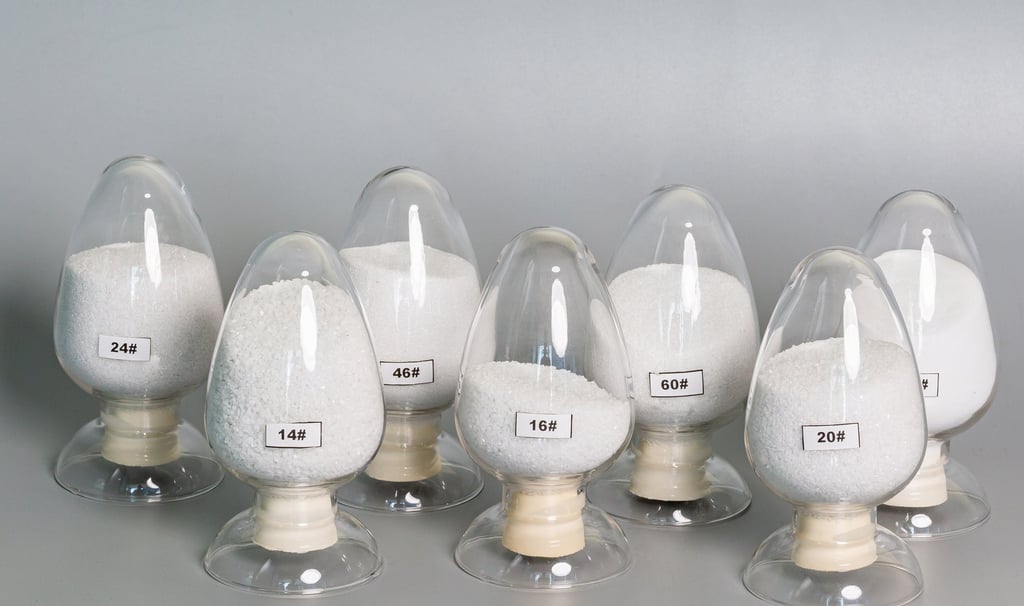
In today’s abrasive materials market, simply promoting “high purity” and “high hardness” is no longer enough. Most suppliers make the same claims, leaving customers with a simple question: why does your product cost more?
The answer lies in cost-effectiveness—not defined by low price, but by maximum value per unit cost. For white fused alumina manufacturers, improving cost-effectiveness requires a shift from price competition to value-driven strategy.
1. Raw Material Control: The Foundation of Performance
The performance of white fused alumina begins with the purity of alumina powder. Cutting costs by using low-grade raw materials often leads to unstable hardness, reduced toughness, and inconsistent results.
High-quality raw materials ensure:
Stable chemical composition
Consistent hardness and strength
Reliable wear resistance
Without a solid foundation, even the lowest price cannot compensate for poor performance. True cost-effectiveness starts with reliability and consistency.
2. Smelting Process Standardization: Consistency Creates Trust
The smelting process plays a decisive role in product quality. Like cooking, temperature and timing determine the final result.
Critical parameters include:
Furnace temperature control
Melting duration
Cooling rate and method
Relying solely on operator experience is no longer sufficient. Modern manufacturers must implement standardized, data-driven processes to ensure batch-to-batch consistency.
Customers value predictability. They expect every shipment to perform the same, without uncertainty.
3. Crushing and Grading Optimization: Unlocking Hidden Value
After smelting, white fused alumina must be crushed and graded into specific particle sizes. This stage significantly affects yield, efficiency, and product quality.
Inefficient processing can lead to:
High material waste
Irregular particle shapes
Wide particle size distribution
By adopting advanced crushing and precise grading systems, manufacturers can achieve:
Higher yield per ton of raw material
More uniform particle shapes
Improved cutting performance
For end users, tighter particle size distribution results in:
Faster processing speeds
Reduced material consumption
Lower overall production costs
This is where real cost-effectiveness becomes visible—not in price per ton, but in cost per application.
4. Application-Specific Products: From Commodity to Solution
Different industries have fundamentally different requirements for white fused alumina. A generic product can no longer meet all needs.
For example:
Grinding wheels require toughness and durability
Polishing applications demand high purity and sharpness
Refractory materials need thermal stability and density
Manufacturers who develop application-specific products can:
Solve precise customer challenges
Improve efficiency in real use cases
Deliver higher perceived value
Customers are not just purchasing abrasive grains—they are investing in performance solutions tailored to their processes.
5. Value-Added Services: Extending Beyond the Product
Cost-effectiveness includes the total cost of use, not just the product price.
Manufacturers can enhance value through:
Technical support and application guidance
Fast and responsive after-sales service
Flexible logistics and inventory solutions
For instance, helping a customer improve efficiency by 20% and reduce waste by 15% creates far more value than offering a small price discount.
Service transforms a product into a long-term partnership.
Conclusion: Competing on Value, Not Price
Price competition is a short-term strategy that often leads to shrinking margins and unstable growth. Sustainable success comes from delivering consistent quality, optimizing production, and understanding customer applications.
When manufacturers provide not only reliable products but also measurable improvements in efficiency and cost savings, customers naturally recognize the value.
At that point, the question is no longer “why is your product more expensive?” but rather:
“Why would I choose anything else?”
Abrasives
High-purity abrasives for various industrial applications.
CONTACT US
© 2026. All rights reserved.

