Professional Abrasives & Grinding Solutions +8615890168176 xlabrasivematerial@gmail.com

The Outstanding Role of Alumina Powder in Advanced Optical Materials
High-purity alumina powder enables the production of transparent ceramics with exceptional strength, thermal stability, and optical performance, making it a key material in modern optical applications.
NEWS&BLOG
2/12/20262 min read
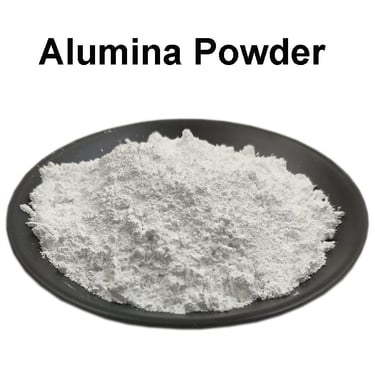
At first glance, alumina may seem like nothing more than a typical industrial material—white, hard, and unremarkable. It is often associated with abrasives or refractories rather than precision optics. However, this perception overlooks its true potential.
When processed into ultra-high purity, ultra-fine powder, alumina becomes a critical material in advanced optical systems. Its transformation from an opaque industrial compound into a transparent or translucent optical material is one of the most impressive achievements in modern materials science.
1. From Hardness to Transparency: A Material Transformation
Alumina, also known as corundum, has a Mohs hardness of 9—second only to diamond. It is the primary component of gemstones such as sapphire and ruby. Traditionally, this hardness has been its defining feature.
In optical applications, however, the focus shifts from hardness to transparency and purity.
Through advanced processing methods—such as controlled synthesis and precision hydrolysis—manufacturers can produce alumina powder with purities of 99.99% to 99.999%. This drastic reduction in impurities is critical. Even trace contaminants can scatter light and reduce optical performance.
Using such high-purity powder, manufacturers can produce alumina ceramics that are:
Translucent or nearly transparent
Capable of transmitting visible and infrared light
Structurally strong and chemically stable
This unique combination allows alumina to bridge the gap between mechanical durability and optical functionality.
2. Real-World Applications: Where Performance Matters
The true value of alumina powder becomes evident in practical applications across multiple industries.
High-Pressure Sodium Lamps
In urban lighting systems, high-pressure sodium lamps rely on translucent alumina ceramic tubes instead of glass. These tubes must withstand:
High तापeratures
Corrosive sodium vapor
Long operating lifetimes
Alumina excels in all these aspects, providing both durability and sufficient light transmission.
Infrared Windows and Protective Domes
In aerospace and defense systems, infrared sensors require protective windows that are both mechanically robust and optically transparent in specific wavelengths.
Alumina ceramics offer:
High hardness to resist erosion
Stability under extreme temperatures
Excellent transmission in infrared ranges
This makes them ideal for applications such as missile guidance systems and high-speed detection equipment.
Electronic and Optical Substrates
Modern optoelectronic devices—including LEDs, lasers, and sensors—require substrates that are:
Electrically insulating
Thermally conductive
Structurally stable
High-purity alumina ceramics provide a smooth, dense surface with minimal defects, ensuring reliable performance in precision devices.
3. Why Alumina Powder Excels in Optical Materials
The success of alumina in optical applications is not accidental. It is the result of a unique combination of intrinsic properties:
Controllable Optical Properties
By adjusting powder purity, particle size, and sintering conditions, manufacturers can precisely control:
Light transmittance
Refractive index
Wavelength response (UV, visible, IR)
Exceptional Mechanical Strength
Alumina offers:
High hardness
Excellent wear resistance
Long service life
This makes it suitable for demanding environments where traditional optical materials would fail.
Chemical Stability
Alumina is highly resistant to:
Acids and alkalis
Corrosive gases
Harsh industrial conditions
Thermal Performance
With a melting point above 2050°C and low thermal expansion, alumina maintains stability under extreme temperatures and rapid thermal changes.
Electrical Insulation
Its high resistivity makes alumina an excellent insulator, which is essential in integrated optical and electronic systems.
Conclusion: A Quiet Leader in Optical Innovation
Alumina powder may not appear glamorous at first glance, but its contribution to modern optical materials is undeniable. By enabling the production of transparent ceramics that combine optical clarity with mechanical strength, it has become a key enabler of advanced technologies.
Compared to traditional optical materials such as single-crystal sapphire, alumina ceramics produced from powder offer:
Greater flexibility in shaping
Lower production costs
Scalability for large components
As a result, alumina powder is no longer just an industrial raw material—it is a strategic material driving innovation in optics, electronics, and beyond.
Abrasives
High-purity abrasives for various industrial applications.
CONTACT US
© 2026. All rights reserved.

